US
US Australia


How To Calculate The Volume Of A Box
Discover how to calculate the volume of a box with easy steps, clear examples, and simple formulas. Learn how our packaging company designs perfect boxes for shipping, storage, and branding using accurate volume measurements.

Emily Parker
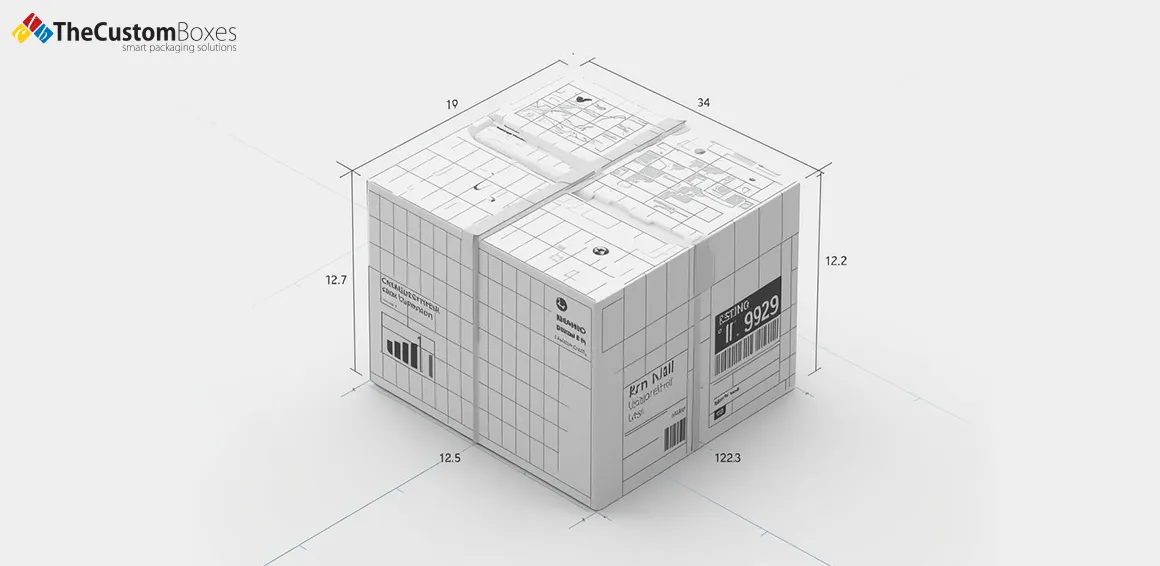
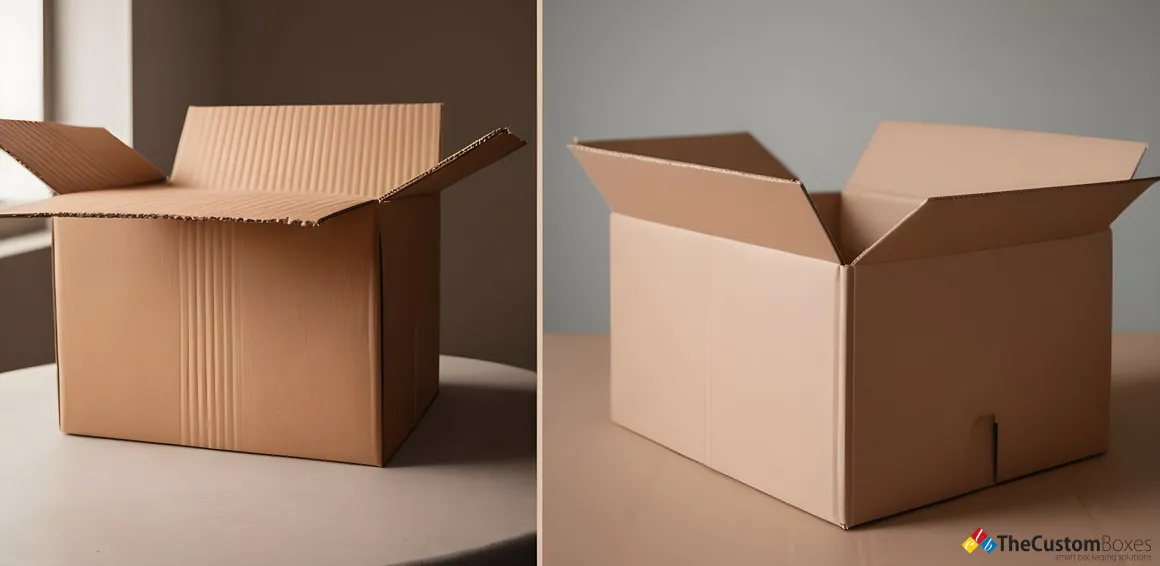
Boxes are everywhere as they are used to pack products, ship goods, and store them. Even in the smallest measurements, such as jewellery boxes to huge shipping cartons, size does matter. That size makes us worthy of knowing the amount of stuff we can fit. This is referred to as the volume of a box.
Volume informs us of the amount of space enclosed in a box. It assists us in selecting the appropriate box. It is just that by knowing the volume, we find it easier to pack our toys, books, or clothes. We produce any type of boxes, big, small, strong, and fashionable. We assist brands in filling their products in a careful and creative way. It is in this blog that we are covering the calculation of the volume of a box in a fun and easy manner.
What Is Volume?
The interior of something is called volume. It informs us of the size of the room that exists to hold things. Volume is that which guides us to know how much you can put in a box. Volume is measured in cubic units such as cubic centimeters or cubic inch. Considering the example of a box and toys, given that you know the volume, you can see the number of toys you can fit.
This comes in handy when we are packing, shipping or storing things. The volume of boxes such as cardboard boxes, mailer boxes and shipping boxes varies. This is the reason why one should know how to compute the volume of a box and then select one.
Dimensions Of A Box
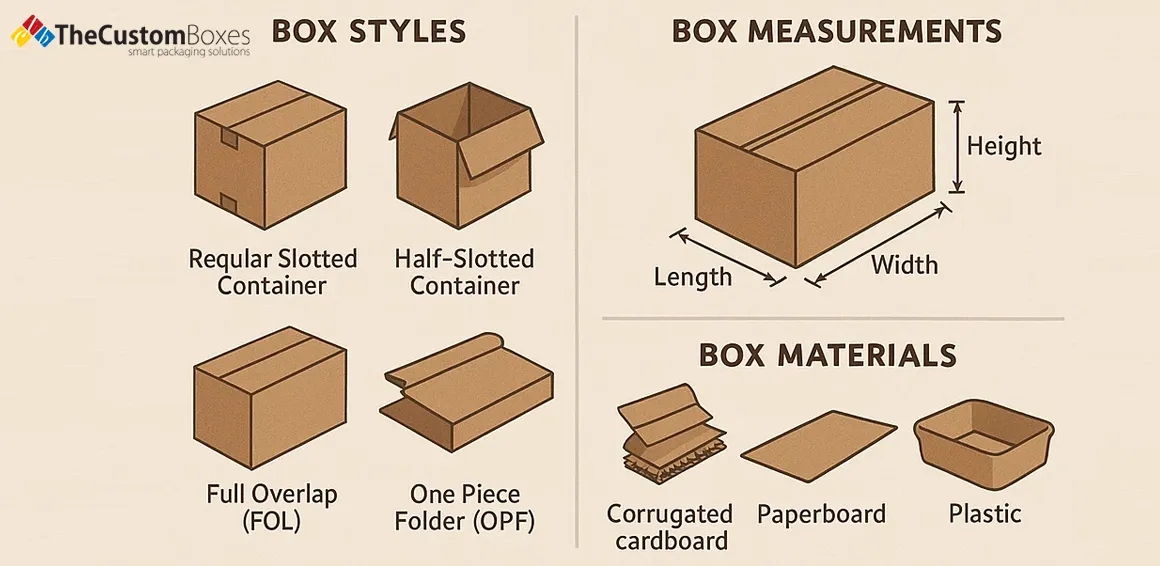
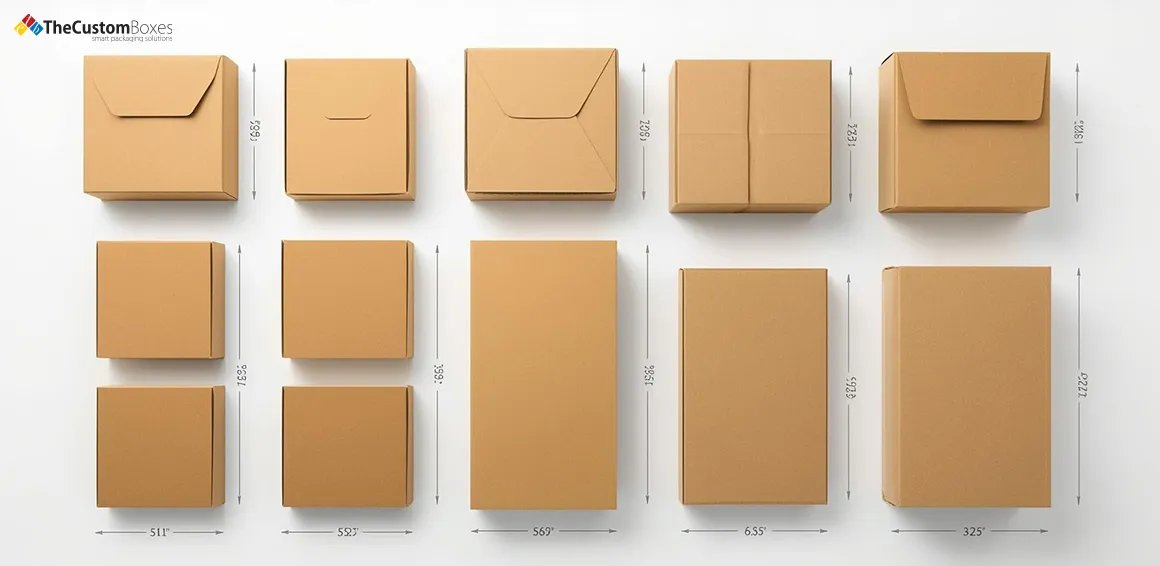
Three crucial measures are needed to calculate the volume of a box or a rectangular prism: length, width, and height.
- The box has its longest side length.
- The short side of the base is the width.
- Height refers to the height of the box.
The total space inside the box is obtained by multiplying the three dimensions. When it comes to packing, shipping, or storing, where it's important to know how much a box can hold, this can be especially useful.
Volume Units And Conversion Table
Depending on the context, volume can be measured using various units. Cubic units are also the most widespread, but in cases of changing between metric and imperial systems, conversions are frequently required.
|
UNITS |
EQUIVALENT |
|
1 cubic centimeter (cm³) |
0.000001 cubic meters (m³) |
|
1 cubic meter (m³) |
1,000,000 cubic centimeters (cm³) |
|
1 liter (L) |
1,000 cubic centimeters (cm³) |
|
1 cubic inch (in³) |
16.387 cubic centimeters (cm³) |
|
1 cubic foot (ft³) |
28.316 liters (L) |
|
1 gallon (US) |
231 cubic inches (in³) |
You can quickly determine the conversion between common units like liters and gallons and less common quantities like cubic meters with this table.
How To Calculate Volume?
The volume of box is in general:
Volume = Length × Width × Height
Steps:
- Record all the three dimensions using the same unit.
- Multiply them collectively.
- Convert the outcome to the desired unit (liters, cubic feet, etc.).
This basic multiplication is applicable in the case of rectangular boxes. In other forms such as cylinders or spheres, other formulae are applied, but the principle is the same: the volume is the space within.



Formula For Calculating The Volume of a Box
Volume = Length Width Height (LWH)
This is the basic formula. It is not hard to recall, and it is not difficult to use. All you have to do is take the measurements of three sides of the box. Then multiply them together. The volume of the box in cubic units will be the answer.
Calculating The Volume Of A Pyramid
A pyramid's height and base dimensions determine its volume. Because a pyramid is tapered, its formula divides length by width and height, whereas a box simply multiplies length, width, and height.
The equation is: Volume = 13 × Base Area × Height
- Base Area: If the pyramid is rectangular, multiply the base's length and width. The triangle area formula is applied when dealing with triangular bases.
- The height of a pyramid is the distance measured perpendicularly from its base to its apex.
How Do I Use The Volume Calculator?
A volume calculator is a time-saving application to avoid manual calculator calculations. The following is how to make use of it:
- Select the Shape:
Choose whether you are calculating a box, pyramid, cylinder, sphere, or a different shape.
- Enter Dimensions:
Enter measurements length, width, height, radius, etc. that are needed in the fields.
- Check Units:
When measuring, always use the same unit, such as cm, m, inches, etc..
- Get Immediate Results:
The calculator will automatically use the appropriate formula and display the volume.
- Change to Calculations:
With a single click, some calculators even let you switch between liters, cubic meters, and gallons.
This is especially helpful in construction, transportation, and packaging, where accurate space measurement is crucial.
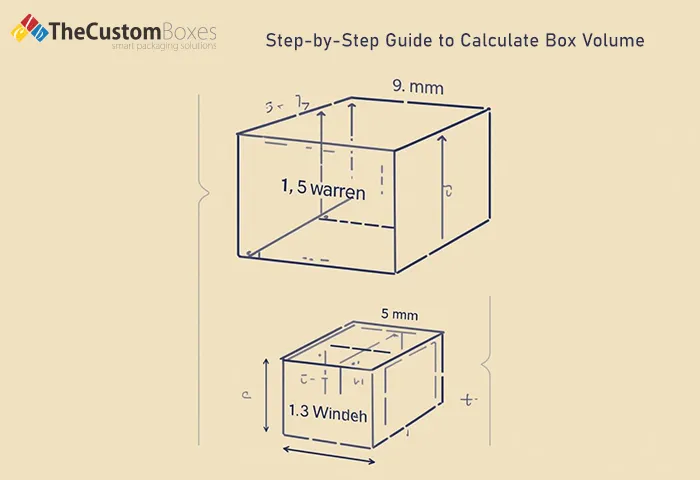
Step-by-Step Guide To Calculate Box Volume
-
Measure The Length
The final side of the box is the longest. It moves from one extreme to the other. A ruler or a measuring tape can be used. Ensure that you are using the same unit of measurement, such as inches or centimeters.
-
Measure the Width
The side running across the box is referred to as the width. It’s shorter than the length. It makes us know the width of the box. Again, the same unit should be used.
-
Measure the Height
Height is how tall the box is. It starts at the bottom and goes up to the top. Some people call it depth. You have to measure its third side. When all three measurements are made, then you can use the formula. Divide width, length and height. That would make it the cubic box volume. This is how our packaging team will constantly come up with flawless cardboard boxes and corrugated boxes for our clients.
Examples of Box Volume

Example 1: Basic Box Volume
Let’s say we have a box that is 11 cm long, 6 cm wide, and 5 cm high. Volume = 11 × 6 × 5 = 330 cubic centimeters.
This means the box can hold 200 cubic centimeters of stuff. It’s a good size for small items like books or toys.
Example 2: A Cube
A cube is a box where all sides are the same. Let’s say each side is 5 cm. Volume = 5 × 5 × 5 = 125 cubic centimeters.
Cubes are great for packing square items. We often use cube-shaped mailer boxes for special products.
Example 3: Converting Units
Sometimes you measure in inches but need the volume in centimeters. Let’s say a box is 5 inches long, 4 inches wide, and 3 inches high. First, convert inches to centimeters (1 inch = 2.54 cm). Length = 5 × 2.54 = 12.7 cm Width = 4 × 2.54 = 10.16 cm Height = 3× 2.54 = 7.62 cm Volume = 12.7 × 10.16 × 7.62 ≈ 983.2 cubic centimeters
This helps when working with international shipping boxes or different packaging standards.
Cubic Meter / Cubic Feet Cargo Calculations
In the case of shipping or storage, volume is commonly represented in cubic meters (m³) or cubic feet (ft³). These units assist in determining the amount of space that goods will have in either a container or a warehouse.
- Cubic Meter (m³): It is widely used in international freight and logistics. A box with a size of 1 m x 1 m x 1 m is one cubic meter.
- Cubic Foot (ft³): This is more widely used in the imperial system of measurements. A box of 1 ft x 1 ft x 1 ft measures one cubic foot.
Conversion:
1 m³ = 35.315 ft³
1 ft³ = 0.0283 m³
This calculation is critical to freight companies because freight costs can be determined based on the volume of the cargo, and not necessarily on its weight.
Volume of a Cuboid Worksheets
A cuboid is merely a box-like object with six rectangular faces. Being able to compute its volume is one of the most important math skills and worksheets are one of the easiest methods to train.
A worksheet typically includes the following elements:
- Students measure length, width, and height in step-by-step challenges.
- issues with terms that use volume in everyday situations, such as how many products can fit in a carton or how many liters of water can be stored in a tank.
- Activities that need switching between different units (cm³, m³, liters, etc.).
- Challenge tasks where students have to solve problems by reasoning and where some dimensions are missing.
Box Design in The Custom Boxes and the Use of Volume
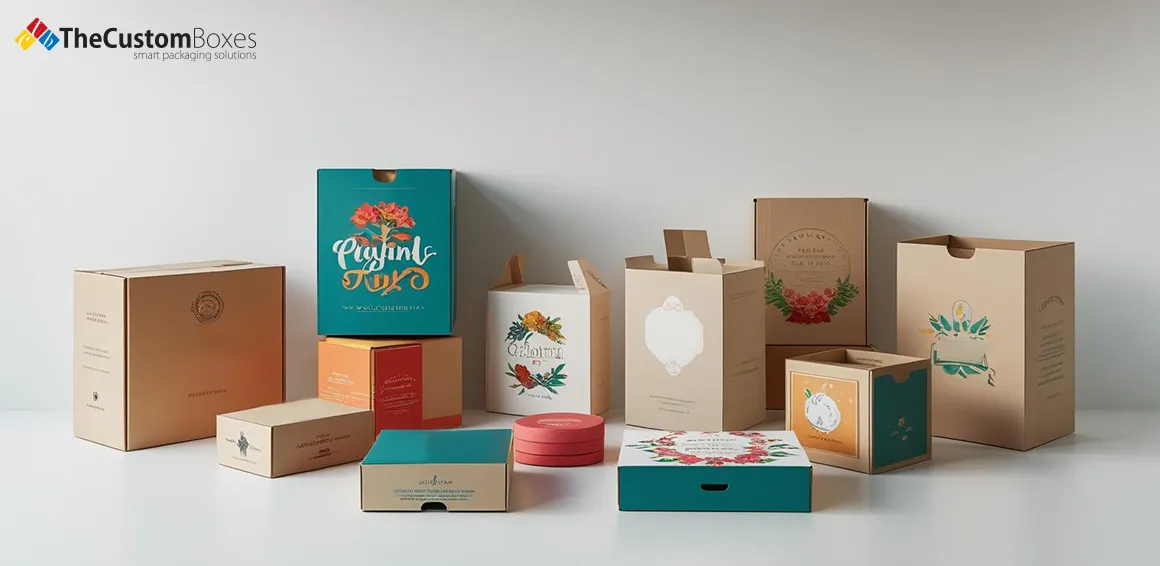
We make boxes to your requirements using volume. Our crew weighs your products and comes up with the volume. Then we make boxes that suit very well. We provide a wide range of cardboard boxes. Our shipping boxes are also long-term delivery boxes. The boxes are crafted in a careful and meticulous manner. Our firm is of the opinion that the packaging must be intelligent and fashionable. That is why volume is what we use to direct our designs. It assists us in developing utilitarian and beautiful boxes.
Conclusion
The volume of a box is easy and convenient to calculate. It informs us of the quantity of space indoors. We make it to create boxes that suit your products. Volume assists us in making intelligent decisions with respect to cardboard boxes and corrugated boxes. This formula is applied on a day-to-day basis in our company to design packaging that works. We think that size is the beginning of good packaging. So that is the reason we measure, calculate and design. Contact The Custom Boxes in case you need boxes that are suitable for your brand and can secure your goods. We design the packaging that is not too big or too small.
Frequently Asked Questions
How to find volume?
Use the formula length × width × height for regular shapes, or specific formulas depending on the object.
How do I measure volume?
By calculating dimensions for solids, or using displacement/containers for liquids and gases.
Is volume squared or cubed?
Volume is always measured in cubed units (m³, cm³, etc.).
How do I calculate volume?
Apply the correct formula for the shape (e.g., cube, sphere, cylinder).
What is the SI unit for volume?
The cubic meter (m³).
How to find the volume of an irregular-shaped object?
Use water displacement or advanced integration methods.
What does volume measure?
It measures the space an object or substance occupies.
How do I calculate surface area to volume ratio?
Divide the surface area of the object by its volume.
What is the formula for the volume of a box?
The formulas are Length x Width x Height. This generates you the volume of the inside of the box cubic units.
What’s the difference between volume and surface area?
The volume of a box is measured by use of volume and the surface area by use of the sum of all sides of the outer.
Why do couriers use volume for shipping costs?
The couriers use volumetric weight because large and light boxes occupy much space. This will ensure that there is fair pricing, that is not attached to the weight, but the space occupied.
What’s the easiest way to calculate box volume online?
It can be a free box volume calculator tool. All one needs to do is to enter the dimensions and it will provide the volume of the box automatically
Premier American Manufacturer of Packaging and Custom Boxes
Experience the ease of creating and ordering custom boxes and affordable packaging online with the Custom Boxes. Contact us today to discover how we can turn your packaging vision into a reality.

Payment & Security
 No Hidden Charges
 Money Back Guarantee
thecustomboxes.co.uk online guarantee the privacy of all the customers and never share their personal information with third parties. For more details read our Privacy Policy.





you might also like