US
US Australia


Recycled vs Recyclable: Key Differences You Need to Know
Get to know the main distinctions between recycling and recycled packages. The fact that to clear standards makes it easier for consumers and producers in the UK to make that decision, since it is more sustainable and ecologically friendly.

Emily Parker
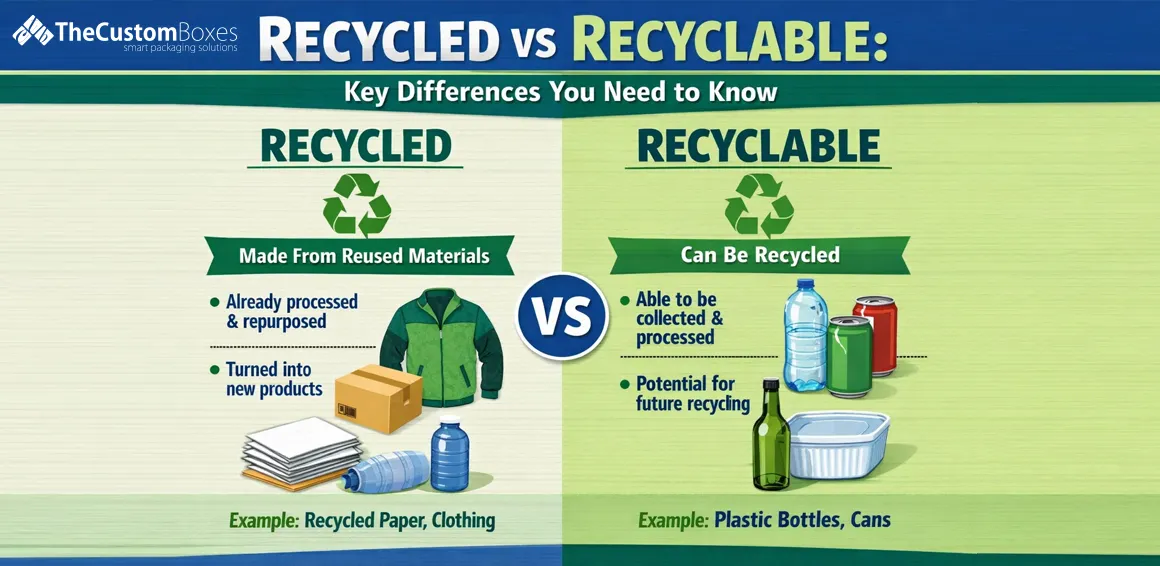
The terms recycled and recyclable continue to create a lot of doubts among many people in the UK. These are words that are similar in appearance, and the brands tend to display them alongside each other on the packaging. This makes the people even more confused. This myth influences actual decisions.
Since the label of the product states that the product is recyclable, one of the consumers can pick up a product, which they believe is eco-friendly, yet this might not be the case since the product has not been recycled previously. In the meantime, companies might purchase recycled wrapping, thinking that it is possible to recycle one more time - this is not always the case. Through these misconceptions a lot of trash ends up in the wrong bin thereby interfering with proper recycling processes.
It is not only useful, but also necessary to understand the difference. It helps people sort their waste correctly and helps companies choose packaging that meets UK rules and customer expectations.
In this blog, The Custom Boxes UK breaks everything down in simple terms.


What Does “Recycled” Mean?
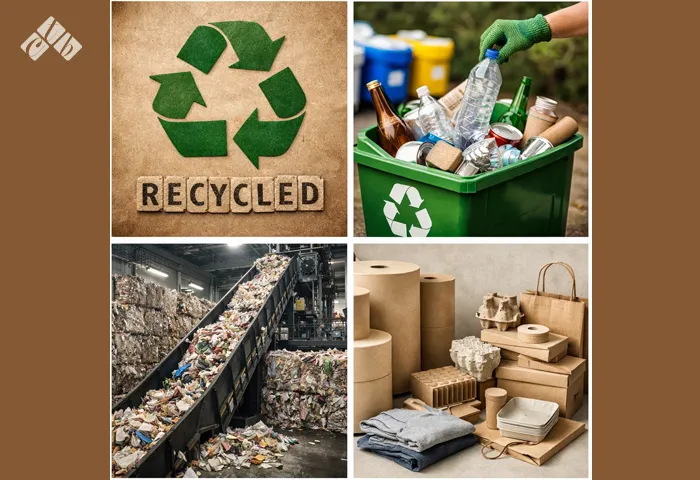
Recycled meaning can be described as something that has been used already and transformed into a new thing. These materials are those that are collected, cleaned and re-processed waste. When the term "recycled material" is used, the first thing that comes to mind is that it was made from leftover paper, plastic, metal, or glass that wasn't dumped in a landfill.
There are primarily two kinds:
-
Post-consumer recycled content
This is material collected after someone has used it. For instance, an old plastic bottle can be turned into rPET flakes and used again.
-
Post-industrial recycled content
This is waste made during manufacturing. Scraps and offcuts are accumulated, reused and recycled instead of being discarded.
Benefits Of Using Recycled Materials
The scraps and the leftovers are not disposed of but they are gathered, mended, and reused. Recycled materials that are sustainable reduce wastage, carbon emissions, and the necessity of new materials. It is also a way of helping the brands demonstrate their concern about the planet. Recycled material is increasingly in demand in the UK due to the increasing customer demand for packages that help in creating a green future.
What Does “Recyclable” Mean?
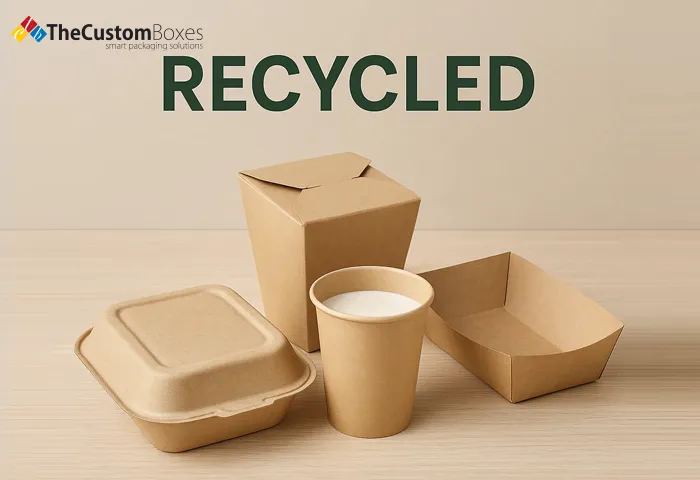
Recyclable meaning refers to materials that can be collected and processed into new items. The key point is that “recyclable” does not guarantee it will be recycled. The item must be clean, sorted correctly, and accepted by local recycling facilities.
Limitations of recyclability
Not everything which can be recycled is recycled due to:
- Food, oil or liquid contamination.
- Laminates that mix plastic and paper
- Nylon in combination with other mixed material pouches, like foil-lined.
These complications render the processing of the items in the UK recycling centres difficult.
Common recyclable materials in the UK
- Cardboard and Paper
- Some such plastics are PET and HDPE.
- Metals such as aluminium and steel.
- Glass
- Clean paper pouches without plastic layers
Recycled Packaging: Features, Pros & Cons
The recycled packaging is based on the concept of providing waste with a second life. Each time a recycled box/bag is used, it is a waste that was not sent to the landfill. Most companies in the UK operate with the help of this kind of packaging in order to demonstrate their readiness to be sustainable.
Pros
There are numerous actual, useful advantages to using recycled packaging. It successfully conforms with UK sustainability laws and has a reduced carbon footprint. It also helps in avoiding waste disposal in landfills. The interest of a company in environmental issues is reflected in using sustainable recycled packaging.
Cons
The vibe of recycled packaging is simple, honest and clean, although it does not feel as polished as it would be on new materials sometimes. Other types of packaging, like the clear plastic materials, are more difficult to recycle into packaging. In some cases, it can cost more because high-quality recycled fibres or rPET are in high demand.
Recyclable Packaging: Features, Pros & Cons
Recyclable packaging is made so it can enter the UK recycling system easily. It has to be clean and be composed of one type of recyclable material. The UK recycling plants are very favourable to items such as cardboard boxes, aluminium cans, glass jars and PET bottles.
Pros
Recyclable packaging is preferred by consumers due to its easy reuse. Properly managed, it will reduce environmental damage. Consumers who consume products with recyclable and sustainable packaging tend to trust brands and buy their products. When the consumers leave the item in the right bin, the benefit to the environment is even greater, and the loop of benefits supporting the circular economy is created.
Cons
Recyclable packaging can only be useful when individuals sort it well. In case one has a dirty item or one mixed with food waste, it can be discarded. Even technically recyclable plastic faces the greatest risk of ending up in a landfill. This may mislead the customers who desire to make good decisions but are not aware of the operation of local systems.
Core Differences between Recycled and Recyclable
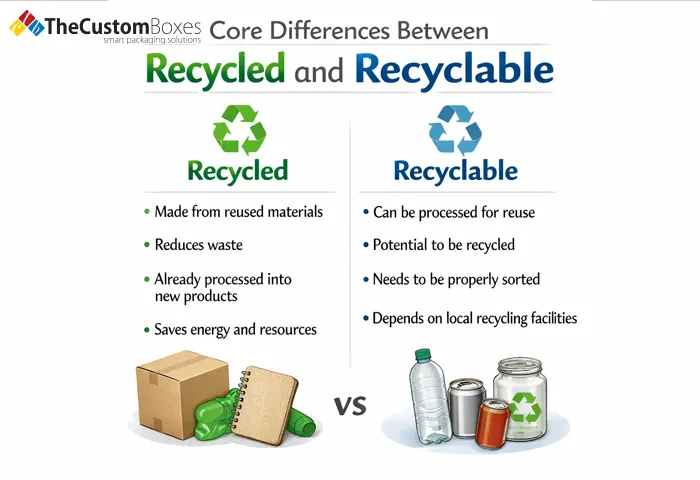
The largest distinction is the place occupied by the recycled and recyclable materials in the waste cycle. Prior to this recycled material has already been used. Recyclable material is one that can be reused in future.
Rules in the UK are concerned with clear labelling and waste minimisation. Still, consumers mix the terms because they sound similar.
Environmental impact comparison
Reused products reduce the amount of resources that have to be used. Waste is prevented through the use of items that can be recycled.
Real-world examples
- A brown recycled cardboard box = recycled
- A clear PET bottle ready for recycling = recyclable
- Recycled paper bag = recycled
- Glass jar = recyclable
Examples of Recycled & Recyclable Packaging in the UK
Common Recycled Packaging Examples
These forms of packaging are manufactured using old materials that have been reused previously. rPET is a type of packaging that is manufactured using recycled bottles made of plastic and is widely used in most industries in the UK. Retailers use recycled paper bags and recycled cardboard boxes which have been recycled.
Common Examples Of Recyclable Packaging
Corrugated cartons are still among the easiest materials to recycle from packing. Moreover, PET and HDPE plastic is commonly used as they are relatively easy to recycle. More food businesses are currently replacing plastics with plain paper pouches in order to make their packaging more eco-friendly and recyclable.
Choosing Between Recycled and Recyclable Packaging
Factors for UK Businesses to Consider
UK businesses must balance cost, customer expectations, and product safety. Recycled materials may cost more but show stronger sustainability efforts. Recyclable items offer easy disposal and broad acceptance. Each choice depends on the product and brand goals.
When Recycled Packaging Is the Better Choice
The recycled packaging is effective when the brands prefer to use low-carbon footprint and high-eco-branding. It suits best with mailers, boxes and paper bags.
When Recyclable Packaging is more suitable
When it is important that packaging is easy to see through and protects the product, then recyclable packaging is the best. Objects such as bottles, jars or even food wrappings usually require recyclable and powerful materials.
Difficulties in Recycled Materials
Other used materials do not appear clean and bright. Recycled fibres of high grade are more difficult to obtain and more expensive. The UK has supply chains that find it difficult to cope with the increasing demand.
Difficulties in Recyclable Materials
Bins that can be recycled can also be recycled, but not by circumventing the councils or lack of clear marking. Contamination and mixed materials are the main causes of hindrance to recycling performance.
UK Recycling Certifications and Regulations
The UK regulations are designed to promote waste reduction and improved packaging by companies. EPR makes producers assume the entire life cycle of their packaging. OPRL makes people know how to dispose of the stuff.
Trends in Packaging Sustainability in the Future
The UK is towards increase the post consumer recycled materials, compostable packaging, and plant-based choices. Light and carbonated packaging are gaining popularity.
Conclusion
Re-packaged materials involve the re-utilisation of old materials to produce new materials. Recyclable packaging is made on the basis of being reused later. The two are important in contaminant reduction. The UK buyer with the brands can contribute by making a selection of the packaging that is either recycled or can be recycled, according to their requirements. The Custom Boxes UK helps the future to be cleaner and greener with definite decisions.
Frequently Asked Questions
What is the difference between recycled and recyclable?
An item that can be recycled if it is collected is recyclable, and the item that has already been recycled and made into something new is recycled.
What are the three different types of recycling?
One uses machines to break items down. Another uses chemicals. And organic recycling is the third one.
What does recyclable packaging mean?
Recyclable packaging is the material that can be collected and used again to make a new item.
Which material is recycled the most?
Paper is recycled the most. This includes cardboard, newspapers, and office paper.
What materials can be recycled?
Everyday items include paper, cardboard, glass, metal like aluminium and steel, some plastics, and food waste.
What are five ways to recycle?
Drop-off centres, return schemes, reusing items, composting food waste, and recycling at home or at work.
What is the difference between recycled and recyclable materials?
Recyclable materials are things that can be recycled. Recycled materials are things that have already gone through the recycling process.
Most popular post


Premier American Manufacturer of Packaging and Custom Boxes
Experience the ease of creating and ordering custom boxes and affordable packaging online with the Custom Boxes. Contact us today to discover how we can turn your packaging vision into a reality.

Payment & Security
 No Hidden Charges
 Money Back Guarantee
thecustomboxes.co.uk online guarantee the privacy of all the customers and never share their personal information with third parties. For more details read our Privacy Policy.





you might also like