US
US Australia


Guide to Royal Mail Parcel Sizes in 2026
Learn Royal Mail parcel sizes in 2026. Easy guide to letters, large letters, small parcels, medium parcels, and oversized items. Avoid mistakes, save money, and choose The Custom Boxes for perfect packaging solutions.

Emily Parker
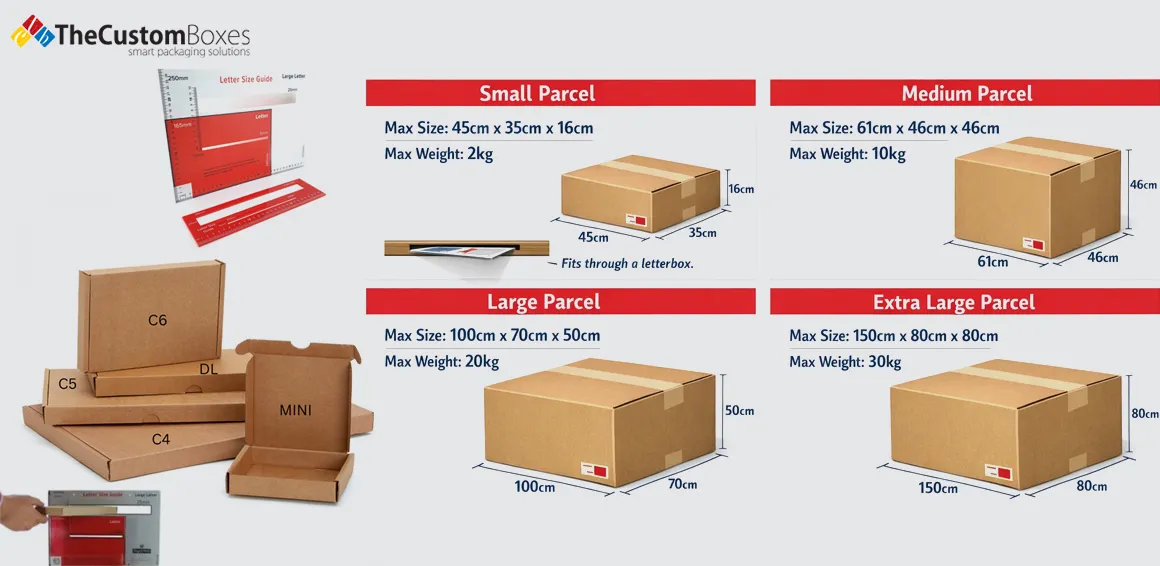
Parcel size rules matter because they decide the postage cost. If you misjudge size, you pay more. Rules also help Royal Mail sort items quickly. They keep the system smooth and fair. They also prevent damage during transport. Correct sizing ensures items fit safely in bags and vans. This protects both sender and receiver.
Readers will learn about standard letter size, large letter dimensions, and parcel limits. They will see how weight affects classification. They will also learn common mistakes to avoid. This guide makes sending parcels simple. By the end, readers will feel confident. They will know how to measure and pack correctly. They will also understand how to avoid surcharges.




Understanding Royal Mail Parcel Size Categories
-
How Parcel Sizes Are Classified
Oversized parcels go to Parcelforce. This system keeps mailing organised. It helps staff sort items faster.
-
Relationship Between Size, Thickness, And Weight
A thin but heavy item may still count as a parcel. A light but thick item may not fit as a letter. Correct measurement avoids mistakes. Balancing these factors is key. Even small changes in packaging can shift categories. That is why careful measuring matters.
-
Why Correct Categorisation Is Important
Correct categorisation saves money. It also avoids surcharges. Wrong sizing may delay delivery. Businesses lose trust if parcels arrive late. It also improves customer satisfaction. Accurate sizing means fewer complaints. It builds trust in your brand.
Who This Guide Is For?
-
Individuals
Individuals sending gifts or documents need this guide. It helps them avoid extra costs. It also ensures items arrive safely. It makes mailing stress-free. People can send items without worrying about mistakes. It also saves time at the post office.
-
E-Commerce Sellers
Online sellers must be familiar with Royal Mail parcel sizes and prices. It affects profit margins. Correct packaging builds customer trust. It also reduces returns. Customers expect fast and safe delivery. Sellers who follow rules gain repeat buyers.
-
Small Businesses and UK senders
Small businesses rely on affordable shipping. Knowing royal mail medium parcel size rules helps them plan. It also avoids reclassification fees. It supports growth. Businesses can budget better. They can also offer reliable delivery to clients.
Letter Size Guidelines
-
General Dimensional Limits For Letters
A standard letter size is up to 24 cm × 16.5 cm × 0.5 cm. The weight limit is 100 g. Letters must be flexible. These rules keep letters easy to sort. They also prevent jams in machines. Following them ensures smooth delivery.
-
Thickness And Flexibility Considerations
Letters must bend easily. Thick or rigid items may not qualify. Flexibility ensures smooth machine sorting. Rigid items may be rejected. That is why packaging must stay thin. Flexibility is key for letters.
Types Of Items Typically Sent As Letters
Letters usually include:
- Documents
- greeting cards
- Invoices
- Thin booklets
Items must stay flat and light. This category is best for paper-based items. It is not suitable for bulky goods. Letters remain the cheapest option.
Large Letter Size Guidelines
How Large Letters Differ From Standard Letters
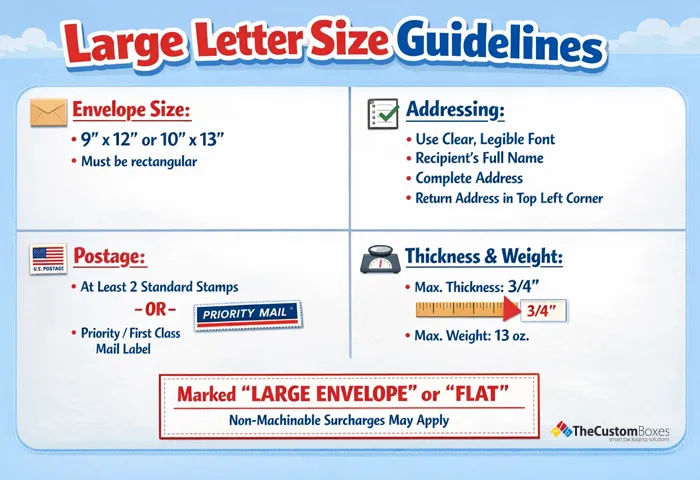
Large letter size allows bigger items. Dimensions go up to 35.3 cm × 25 cm × 2.5 cm. This makes space for magazines and catalogues. It is ideal for thin but larger items. It bridges the gap between letters and parcels.
Maximum Thickness And Weight Considerations
Large letter measurements allow thickness up to 2.5 cm. The weight limit is 750 g. This category suits lightweight but thicker items. It prevents misclassification. It also keeps mailing affordable.
Common Use Cases For Large Letters
Magazines, small books, and thin clothing fit here. Businesses often use this for catalogs. It is also used for promotional material. Flyers and brochures often fit. It is popular among marketing teams.
Small Parcel Size Guidelines
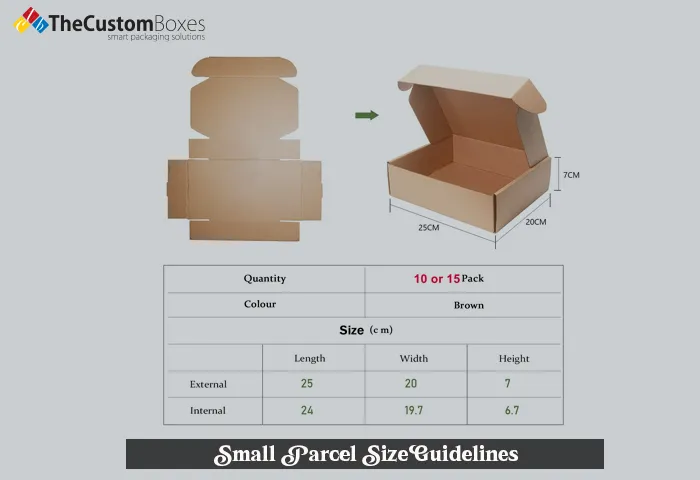
Dimensional Limits For Small Parcels
Royal Mail small parcel size is up to 45 cm × 35 cm × 16 cm. It is flexible for gifts and small products. It is widely used by sellers.
Weight Restrictions And Handling Rules
The weight limit is usually 2 kg. Some services allow up to 5 kg. This keeps parcels manageable. It also ensures safe transport. Heavier items move to medium parcels.
How Small Parcels Are Processed
Small parcel measurements fit sorting machines. They are scanned and routed quickly. This speeds up delivery. It also reduces manual handling. Small parcels are efficient for Royal Mail.
Medium Parcel Size Guidelines
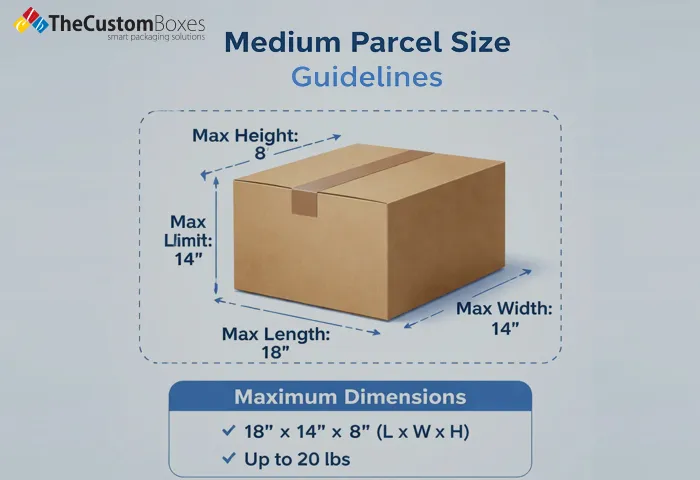
Size And Weight Thresholds For Medium Parcels
Medium parcel size goes up to 61 cm × 46 cm × 46 cm. The weight limit is 20 kg. This category suits larger household items. It is common for bulkier deliveries. It offers flexibility for businesses.
When An Item Moves From Small To Medium Parcel
If dimensions exceed small parcel limits, it becomes a medium parcel. Even if the weight is low, size matters. This prevents overloading machines. It also ensures safe transport. Size rules protect both sender and receiver.
Handling And Transport Considerations
Medium parcels need more space. They are often handled manually. This makes them slower to process. It also increases costs. Careful packaging is important.
Large and Oversized Parcel Considerations
When Parcels Exceed Standard Parcel Limits
Items larger than medium parcel rules count as large parcels Royal Mail. These items are rare but important. They often include furniture. They require special handling.
Length And Girth Measurement Rules
Length plus girth must be measured. Oversized items may go to Parcelforce. This ensures fair pricing. It also prevents damage. Measuring correctly avoids mistakes.
How Oversized Parcels Are Handled
They are transported separately. Costs are higher. They may need special vehicles. Delivery times are longer. Oversized parcels require planning.
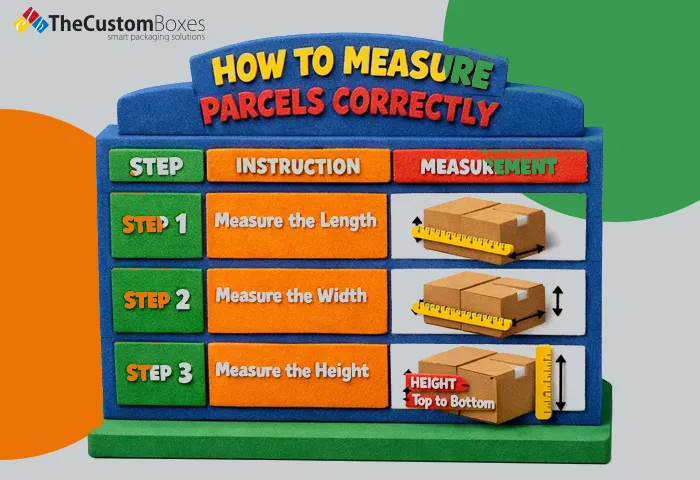
How to Measure Parcels Correctly
-
Measuring Length, Width, And Depth Accurately
Measure the longest side first with a ruler. Accuracy prevents mistakes. Even small errors matter. Always double-check measurements.
-
Measuring After Packaging And Sealing
Always measure after sealing. Packaging adds thickness. This ensures correct classification. It avoids re-sorting. It saves money.
Common Measurement Mistakes To Avoid
- People often misjudge thickness. They forget that packaging adds size.
- Some ignore the rigid rules. These mistakes cause surcharges.
- Others guess weight instead of using scales. Guessing leads to errors.
Always measure carefully.
Weight Limits Across Parcel Sizes
-
Weight Thresholds By Parcel Category
- Letters: 100 g.
- Large letters: 750 g.
- Small parcels: 2–5 kg.
- Medium parcels: 20 kg.
These limits keep mailing fair. They also protect staff. Heavy items need stronger handling.
-
How Weight Affects Parcel Classification
Weight can push items into higher categories. Even small items may cost more. This ensures safety. It also balances costs. Weight rules are strict.
-
Scenarios Where Weight Causes Re-Classification
A heavy book may exceed the weight for a 1st class post. It becomes a parcel. This protects machines. It also avoids damage. Heavy items need stronger packaging.
Reclassification and Surcharges
-
What Happens If A Parcel Exceeds Size Limits
Royal Mail reclassifies it. You pay extra. This keeps the system fair. It also prevents misuse. Rules apply to all senders.
-
How Automated Sorting Identifies Incorrect Sizing
Machines scan dimensions. Wrong sizes are flagged. This speeds up detection. It also reduces human error. Technology ensures accuracy.
-
Consequences Of Misclassification
It damages trust. It also increases costs. Businesses must avoid this.
Preparing Parcels to Meet Size Requirements
-
General Packaging Best Practices
It is crucial to adhere to general packaging best practices while packing packages.
-
Ensuring Parcels Remain Within Size Limits
Measure after sealing and choose the correct box size to avoid surcharges. Double-check dimensions before shipping, distribute contents evenly to prevent bulging, and keep spare box sizes on hand for flexibility.
-
Label Placement and Visibility
Label placement and visibility also play a key role. Place labels flat and ensure barcodes are visible.
Common Mistakes When Sending Parcels
-
Misjudging Thickness
Many senders make common mistakes when posting parcels. Wrong thickness is one of the most frequent errors, as items often exceed letter thickness. Folded documents may unexpectedly surpass limits, thick envelopes often require parcel postage, and it is always wise to compare with Royal Mail’s official size guide.
-
Incorrect Weight Estimation
Incorrect weight estimation is another issue. Guessing weight causes errors, so using scales is essential. Lightweight items can still be dense and heavy; overestimating weight wastes money, and digital scales provide the most accurate readings.
-
Ignoring Shape and Rigidity
Ignoring shape and rigidity is also problematic. Rigid items may not qualify as letters, cylindrical or irregular items often need parcel rates, and flexible packaging may qualify as letters if within limits.
Conclusion
We also gave an explanation of the Royal mail parcel sizes and weight, which comprise the letters, large letters, small parcels and medium parcels, which have their own regulations. Oversized packages should be processed in a special manner, and even delays in delivery can be avoided by following the policies of the Royal Mail.
Although proper packaging guarantees consumer delight as well as brand image, proper measurement decreases expenses and averts excessive charges. Compliance packaging costs reduce the shipping expenses in the long term, and the companies should comply with these rules to promote confidence. The Custom Boxes UK should also help you make your brand and business better by buying boxes. The packaging of our company meets these requirements.
Frequently Asked Questions:
What are Royal Mail Parcel Sizes?
There are four major types of size offered by Royal Mail. These are Large Parcel, Letter, Small Parcel and Medium Parcel. There are fixed dimensions of length, breadth, depth, and weight for each size.
What are Royal Mail Parcel Size for Large Letter?
A Large Letter may be up to 35.3 cm long, 25 cm wide and 2.5 cm thick. The maximum weight is 750 g.
Does Royal Mail charge by weight or size?
Measuring the length, width and height of your item. Always measure the broadest points. Measure these sizes and compare them with Royal Mail size limits to select the appropriate category.
Is postage based on size or weight?
Royal Mail has a pricing system that is determined by size and weight. Your package has to be within a size range and remain below the weight limit of the size range.
What is too big for a Royal Mail parcel?
The first consideration of postage is the size and then the weight. A light one might be cheaper than a heavy one.
What is the Royal Mail Parcel Size for Small Parcel?
A parcel more than 61 cm or weighing more than 20 kg is excessively large. Products that exceed these thresholds can either be rejected or require the services of a courier.
What is the Royal Mail Parcel Size for Medium Parcel?
Maximum width of a Small Parcel is 35 cm, length 45 cm and 16 cm deep. The maximum weight is 2 kg.
How do I calculate my parcel size?
A Medium Parcel may be as long as 61 cm, as wide as 46 cm and as deep as 46 cm. It should not exceed 20 kg.
Why should I choose a small parcel?
Small packages incur fewer expenses. They fit well when shipping light packages and prevent the additional postage costs.
Premier American Manufacturer of Packaging and Custom Boxes
Experience the ease of creating and ordering custom boxes and affordable packaging online with the Custom Boxes. Contact us today to discover how we can turn your packaging vision into a reality.

Payment & Security
 No Hidden Charges
 Money Back Guarantee
thecustomboxes.co.uk online guarantee the privacy of all the customers and never share their personal information with third parties. For more details read our Privacy Policy.





you might also like