
 US
 Australia


How to Make Custom Eyelash Boxes
Understand the design, printing, assembly, testing, and preparation of custom eyelash boxes for safe presentation and delivery to retail stores.

Emily Parker
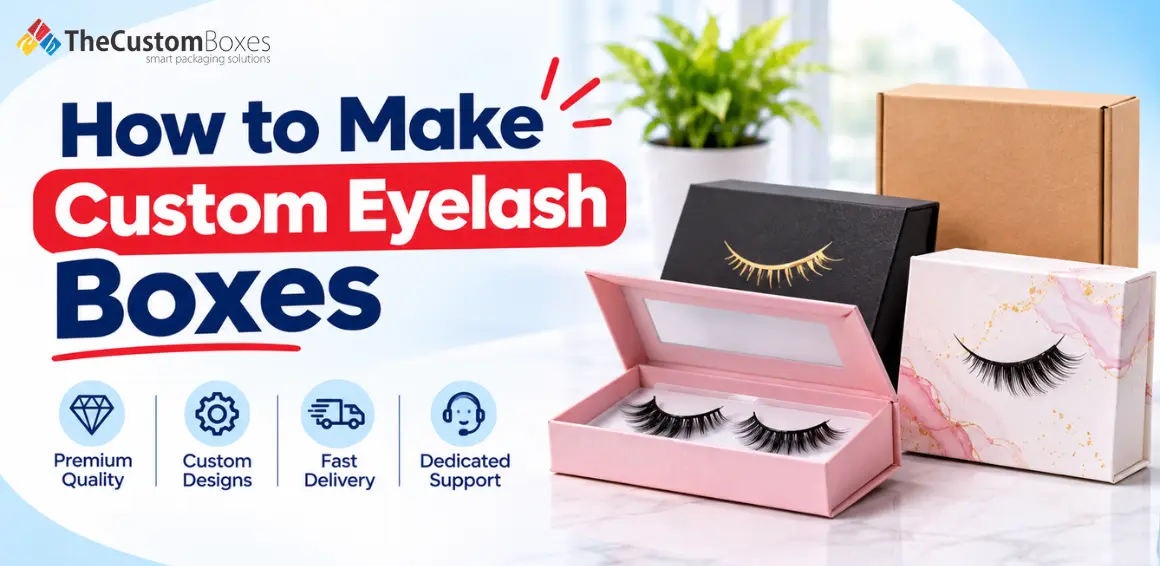
Eyelash boxes are not only designed to keep the lashes safe, but they're put to use to draw attention and add some excitement to the unboxing event. Customised packaging takes pride in your individual style, will not harm delicate fibres in transit and will give you a luxurious appearance that will stand out on the store shelves or online storefronts and draw attention.
Whether you're looking for boxes that are practical for storage or ones that are aesthetically pleasing, building the proper box is an enormous boost to your lash collection.
This blog will explain how to create a custom eyelash box, from the materials and design process to some simple steps to make eyelash boxes professionally.
Understand Your Eyelash Product
First of all, get to know what's being put into the box. Inspect the style of lash and the size, thickness, and accessories of the trays. Some lash sets contain lash glue or tweezers. The others include only the lash pair.
All these details make a difference to the box size. They also impact the design of the insert. The box should not be against the lashes. It shall prevent them from being lost in storage or shipment.
Measure The Lash Tray
Accurate measurement is an important step. Take measurements of the finished product for length, width, and height.
Never measure the free lashing only. Take measurements of the actual tray and accessories. Provide adequate room for safe placement.
Choose The Box Style
Then, select an appropriate structure.
- Folding cartons can be used for a lot of retail products.
- Sleeve boxes give a clean and modern appearance.
- Drawer boxes provide a luxurious unboxing experience.
- The lashes can be shown in window boxes as well.
- Magnetic rigid boxes are ideal for upscale lash collections.
Select The Packaging Material
The strength and appearance of the material are affected by the material. Eyelash packaging is generally made of paperboard. Easily printable and light.
The natural look is provided by the Kraft board. A rigid board provides a stronger and more luxurious feel. Recycled paperboard can play its part in supporting sustainability.
Generate a Box Design
The visual design is now ready. Include the logos, brand names, lash style, length, curl, and other pertinent information. Do not cover the front panel. The customer should familiarise himself with the product as early as possible.
Colours should be in tune with your brand. Finishes can be used for added appeal. These can come in the form of foil stamping and gloss effects.
Prepare The Dieline
The technical template of the box is the dieline. It illustrates all cuts, folds, panels, and flaps. The packaging designer creates the dieline as per the selected structure. The size should be the same as the product to be manufactured.
This is a critical stage since any sizing error may impact assembly. A professional dieline will also reduce any production issues.
Print The Packaging
After approval of artwork and dieline, printing starts. The selected design is printed on film packaging materials. Digital printing is suitable for short print runs and intricate designs. For higher production volume, offset printing can be used.
There should be a check for colour accuracy in this phase. The printed result should be consistent with the approved artwork and colours of the brand.


Cut And Crease The Sheets
The sheets are then cut after printing to the dieline. Lines are also creased. Cutting will make the same box shape. Creasing allows for easier and cleaner folding.
Modern production equipment ensures uniformity of dimensions. Appropriate cutting also avoids rough edges and creasing that is uneven.
Add Finishing Touches
The next phase is the finishing stage. For instance, matte lamination produces a soft effect. Colours appear brighter when they are glossy.
Use finishes judiciously. There just isn't enough room for too many effects.
Apply And Customise The Lash Insert
The insert is used to hold the product in place. Can be produced from paperboard, moulded fibre, foam, or other appropriate material. Lash tray must be held without any damage in the insert. Test the insert on the actual product.
This step is particularly crucial for light rigging. A good insert minimises the amount of movement during handling and delivery.
Fold and Assemble the Boxes
The printed sheets are now converted into boxes. The panels are folded around the crease lines.
Glue or other means of assembly may be used depending on the structure. The box is the place for inserting inserts. Each box is supposed to shut. The lashing should not be compressed by the lid. The package should also open easily in the end.
Check the Final Quality
Quality control is done prior to bulk packing. Examine dimensions, prints, folds, closure and finish of the box. Lash in place inside, not out. Test to see if the insert is holding the tray properly.
Prepare And Dispatch The Completed Boxes
The boxes are then quality checked and ready for delivery. Flat-folding cartons can be efficiently packed for space saving.
Packaged foods should be kept free from moisture, collapse, and undue pressure. Good outer cartons minimise damage in transit.
Make Eyelash Packaging More Sustainable
Design should take account of sustainability. Don't add too much detail to structures.
When suitable, paper can be used in place of plastic. Recycled materials can also help to promote a more environmentally friendly packaging approach.
Stats Table
|
Packaging Factor |
Useful Guidance |
|
Box size |
Match the actual product. |
|
Insert |
Hold the lash tray securely. |
|
Material |
Choose according to weight and use. |
|
Printing |
Match approved brand artwork. |
|
Sampling |
Test before bulk production. |
|
Sustainability |
Reduce unnecessary material. |
Why Lash Brands Need Custom Eyelash Boxes
Quality custom eyelash boxes are more than just protective. They make a good first impression for a business first impression. Custom sizing minimises wasted space. Effective inserts can help protect products. Branding can also help to make various lash styles easier to identify.
In developing beautiful brands, uniformity in packaging can assist in establishing a more defined visual identity across the various offerings.
Make Your Own Eyelash Packaging!
Attractive artwork is not enough to create a quality custom eyelash box. The product needs to be accurately weighed. The building needs to be evaluated. Materials, printing, inserts, finishing and assembly need to be in harmony.
The Custom Boxes UK can assist you in bringing your packaging concept to a practical packing box design. Begin by using your lash sizes, pick the perfect structure and order a sample prior to bulk manufacturing.
Frequently Asked Questions
What is the first step in making custom eyelash boxes?
The first step is to accurately measure the complete lash product and its tray.
What material is commonly used for eyelash packaging?
Paperboard is commonly used for eyelash packaging.
Why is there a need for an insert in an eyelash box?
An insert helps to secure the lash tray and keeps the product from moving.
Should I test a sample prior to ordering?
Yes, the physical sample allows for checking product fit.
Is it possible to have an eco-friendly eyelash box?
Yes, brands used ecofriendly packaging.
Premier American Manufacturer of Packaging and Custom Boxes
Experience the ease of creating and ordering custom boxes and affordable packaging online with the Custom Boxes. Contact us today to discover how we can turn your packaging vision into a reality.

Payment & Security
 No Hidden Charges
 Money Back Guarantee
thecustomboxes.co.uk online guarantee the privacy of all the customers and never share their personal information with third parties. For more details read our Privacy Policy.


you might also like


